Bloomberg's Joe Weisenthal and Tracy Alloway analyze the weird patterns, the complex issues and the newest market crazes. Join the conversation every Monday and Thursday for interviews with the most interesting minds in finance, economics and markets.
Similar Podcasts
El Podcast de Bitpanda | Inversión, criptomonedas y Bitcoin
Con El Podcast de Bitpanda queremos hacer mucho más accesible y comprensible el mundo de las finanzas personales, la inversión y los criptoactivos, como Bitcoin, a todos, sin importar la experiencia previa.Moisés Santos, del equipo de Bitpanda España, recibe a un invitado en cada episodio y charlan sobre finanzas personales, Bitcoin, Ethereum y más criptoactivos, tecnología blockchain, NFT y muchos más términos que no tienen por qué ser complicados.Bitpanda es uno de los neobrokers más grandes de Europa y actualmente más de 3 millones de clientes confían en nosotros. Descarga la app para iOS y Android y empieza a invertir desde 1 € en los más de 1.000 activos que tenemos disponibles las 24 horas: cripto, acciones fraccionadas, ETF y metales preciosos. Síguenos también en Instagram y Twitter @bitpanda_es La inversión en criptoactivos no está regulada, puede no ser adecuada para inversores minoristas y perderse la totalidad del importe invertido. Es importante leer y comprender los riesgos de esta inversión que se explican detalladamente en bitpanda.com/es/inversiones/criptomonedas Bitpanda Stocks son contratos que replican acciones o ETF subyacentes y es un producto facilitado por Bitpanda Financial Services.
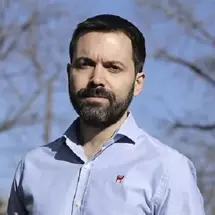
Podcast de Juan Ramón Rallo
Podcast de Juan Ramón Rallo sobre economía, filosofía, política y liberalismo.
Hazte miembro en: https://plus.acast.com/s/juanrallo.
Hosted on Acast. See acast.com/privacy for more information.
Running in Production
Hear about how folks are running their web apps in production. We'll cover tech choices, why they chose them, lessons learned and more.
Inside The Booming World of Initial Coin Offerings
By now everyone's heard of Bitcoin, and probably has an opinion on it. But the world of cryptocurrencies has a new object of fascination: ICOs. Whereas the tech boom in the 90s was characterized by an obsession with IPOs, these ICOs (initial coin offerings) are cryptographic tokens being sold onto the market for hungry investors eager to get in on new ventures. And while some ICOs are connected to companies, others are connected to "protocols" that aren't even recognizably corporations. Confused? You're not alone. On this week's episode, we talk to Chris Burniske of asset management company Ark Invest to talk about this fascinating new world. See omnystudio.com/listener for privacy information.
The True Story Of America's Catfish Gold Rush
America has had many well-known booms and busts in its history: Real estate, internet stocks, Beanie Babies... too many to list. But did you know there was once a catfish gold rush? Yep, starting in the 1970s, farmers in the south, in states like Mississippi, Alabama, Louisiana, and Arkansas started devoting thousands of acres to catfish farming in the hopes that catfish would become America's next great white meat. Joining us on this week's Odd Lots is Mike McCall, the editor of the Catfish Journal, and the author of "Catfish Days: From Belzoni To The Big Apple," to talk about how the boom happened and why it eventually collapsed. See omnystudio.com/listener for privacy information.
Why Everyone's Talking About the VIX and 50 Cent
For the past few years, everyone in markets has been talking about nothing. Market moves have been subdued and the Chicago Board Options Exchange's Volatility Index, better known as the VIX, recently sank to its lowest in about three decades. We speak with Pravit Chintawongvanich, head of derivatives strategy at Macro Risk Advisors and an expert in volatility. He explains what the VIX actually measures, why it's so low, and how betting against sharp moves in the market became one of the hottest and most lucrative trades around. We also talk about "50 Cent." That's not the rapper, but the mystery buyer who's been bucking wider trend and buying volatility protection at a consistent clip. See omnystudio.com/listener for privacy information.
Poker Legend Phil Hellmuth Has Advice That Traders Should Hear
Phil Hellmuth is one of poker's biggest stars. His success is undeniable, as he's won 14 bracelets at the World Series of Poker, more than anyone else. And his outsize personality at the table has earned him the nickname "The Poker Brat." But while Hellmuth may be known for his outbursts and colorful behavior, he's actually one of the most disciplined players the game has ever seen. On this week's Odd Lots, Phil explains how he manages risk, how he avoids going on "tilt," how he prepares for big tournaments and how he keeps a fundamentally optimistic outlook on life. He also offers three simple words of advice for everyone who trades. See omnystudio.com/listener for privacy information.
What a 150-Year Old Indian Railway System Tells Us About Trade
It's no secret that international trade has been criticized lately. But why exactly are countries generally happy to trade within their borders -- from one state or town to another, for example -- but more reluctant to trade across international ones? And why are countries so focused on making things domestically? On this edition of the Odd Lots podcast we speak to an over-achiever in the field of economics who specializes in trade and is known for rigorous research that has included poring over railway records from the British Raj era in India. Dave Donaldson is the most recent recipient of the prestigious John Bates Clark Medal awarded to economists under the age of 40. He speaks about what he learned from studying trade across history and what exactly it has to offer in modern times. See omnystudio.com/listener for privacy information.
How Instagram Turned Into a Giant Market for Food
Avocado toast, unicorn frappuccinos, and kale salads. Taking photos of your food and putting them on Instagram is a now a huge trend that's transforming markets in more ways than one. In this edition of the Odd Lots podcast we talk about how photogenic foods are impacting commodities prices, and how the retail market is actively courting Instagram 'influencers' who can promote their business. We speak with Amanda Topper, a food blogger who works as associate director of foodservice research at Mintel, as well as Julie Verhage, a Bloomberg reporter who's written about the impact of Instagram on commodities prices. See omnystudio.com/listener for privacy information.
How a Fund Manager's Trying to Fix Some of the Mideast's Issues
When you think about the Middle East what springs to mind? Perhaps oil, maybe political instability, terrorism or even war. On this week's episode of the Odd Lots podcast we speak to someone who's trying to tackle the region's biggest issues in new and creative ways. Emad Mostaque is the co-chief investment officer of Capricorn Fund Managers Ltd. and a long-time specialist in Gulf markets who successfully predicted the collapse in oil prices that's currently causing a headache for many Middle Eastern economies. He talks about his proposal to give OPEC a brand new tool to control the crude market in the face of rising U.S. production, as well as a new project to use big data and technology to fight Islamic extremism and help Syrian refugees find jobs. See omnystudio.com/listener for privacy information.
One Of The Top Chess Players Talks Computers & Options Trading
On this week's episode of the Odd Lots podcast, we talk to Hikaru Nakamura, one of the best chess players in the world. Currently ranking in the top seven, Nakamura achieved grandmaster status at a younger age than Bobby Fischer did. These days in addition to chess, Nakamura actively trades options, and on this episode he talks about the similarities and differences between the two pursuits. We also talked about poker, what it takes to be a pro chess player, and how computers and artificial intelligence are changing everything. See omnystudio.com/listener for privacy information.
How to Use Pop Music to Forecast the Stock Market
When most people analyze the stock market, they look at stuff like revenues, earnings, valuations, and economic conditions. But some people like to look at the Billboard music charts or what kinds of films are popular at any given moment. On this week's Odd Lots, we talk to Matt Lampert, the director of research at the Socionomics Institute, which attempts to analyze the market by looking at the nation's social mood. And there's no better way to examine society's mood than by looking at pop culture. Are horror movies in vogue? Are people listening to upbeat pop songs? Each of these things, according to Lampert, can offer a clue about the state of the nation and therefore which way the market will go next. See omnystudio.com/listener for privacy information.
What Happens When Markets As We Know Them Cease to Exist
What if you woke up tomorrow and found the U.S. stock market was closed for good? That happened to investors in the Russian market after the communist revolution in 1917, leading to huge losses for people who had put their money in what was then one of the major economic and political powers in the world. The Russian example was brought up last month by Ray Dalio, founder of Bridgewater Associates, who sounded the alarm over the rise of populism and its impact on markets. In this edition of the Odd Lots podcast, we pick up the theme with Simon Hinrichsen, assistant portfolio manager at First State Investments, and guest co-host Sid Verma of Bloomberg News. We discuss how investors can prepare for the very worst. Along the way, we ask whether the dominant forces in markets today -- powerful countries, institutions and investment theories, such as the relationship between bonds and stocks -- can survive forever. See omnystudio.com/listener for privacy information.
Inside the Hidden Cycles That Rule Markets and Life
History, as you may have heard, has a tendency to repeat. But does it repeat in ways that are measurable and predictable? We speak with Peter Borish, a veteran investor and trader who is currently chief strategist at the Quad Group. His experience reaches back three decades to when he worked for the legendary Paul Tudor Jones in 1985. Throughout his career, Borish has studied cycles, looking for patterns in data and human behavior, to help him anticipate turning points in markets and the economy. He talks about his approach, the use of data, how trading has changed over the course of his career -- and of course, what he thinks about the market right now. See omnystudio.com/listener for privacy information.
This Is How You Know When the Stock Market Is in a Bubble
One of the most fascinating market phenomenons is the bubble. When they occur, fortunes are made and lost, and the full spectrum of human emotions, from fear to greed, are on display. But what defines a bubble exactly, and how do you know when you're actually seeing one? This week on Odd Lots, we speak with Harvard Business School economist Robin Greenwood, who has figured out the key characteristics that all stock market bubbles have in common. See omnystudio.com/listener for privacy information.
How a Fund Manager Teaches His Kids About Money and Banking
Plenty of people pay their kids an allowance to teach them the value of hard work and earning money. But our guest on this week’s Odd Lots podcast takes it to the next level. Toby Nangle is a fund manager at Columbia Threadneedle Investments, who also happens to be fascinated with the question of how money and banking really work. So rather than just give his kids a typical allowance, he uses their spending money to run monetary experiments. How do children react to higher rates on savings? How do they react to negative interest rates? What are the ramifications of his policies on his own internal household wealth inequality. In this episode, Nangle talks about what he and his kids have learned in the process. See omnystudio.com/listener for privacy information.
What the Berkshires Learned by Launching its Own Currency
"Buy local" is a mantra that has appeal across the political spectrum. Small communities have preached this gospel for a long time. Our current president advocates a version on a national scale. So how do you put it into practice? One experiment has been taking place in the Berkshires -- a region in the U.S. state of Massachusetts -- that has its own currency called Berkshares. On this week's Odd Lots podcast, we speak with Alice Maggio, the executive director of the currency, about how a regional currency works, what it accomplishes, and what they've learned from it. See omnystudio.com/listener for privacy information.
How the Biggest Bull Market Could Go on for a Whole Lot Longer
A few weeks ago on the Odd Lots podcast, we talked to Paul Schmelzing, a Ph.D candidate at Harvard, who explained how the bull market in U.S. Treasuries could come to a screeching halt. This week we examine the other side of the debate. Our guest is Srinivas Thiruvadanthai, director of research at the Jerome Levy Forecasting Center in Mount Kisco, New York. He explains how a combination of structural factors in the global economy and massive levels of debt could depress interest rates on government debt for years to come. In addition to explaining why the bond bull market of more than three decades can survive, Thiruvadanthai explains what everyone gets wrong on how inflation occurs. See omnystudio.com/listener for privacy information.